
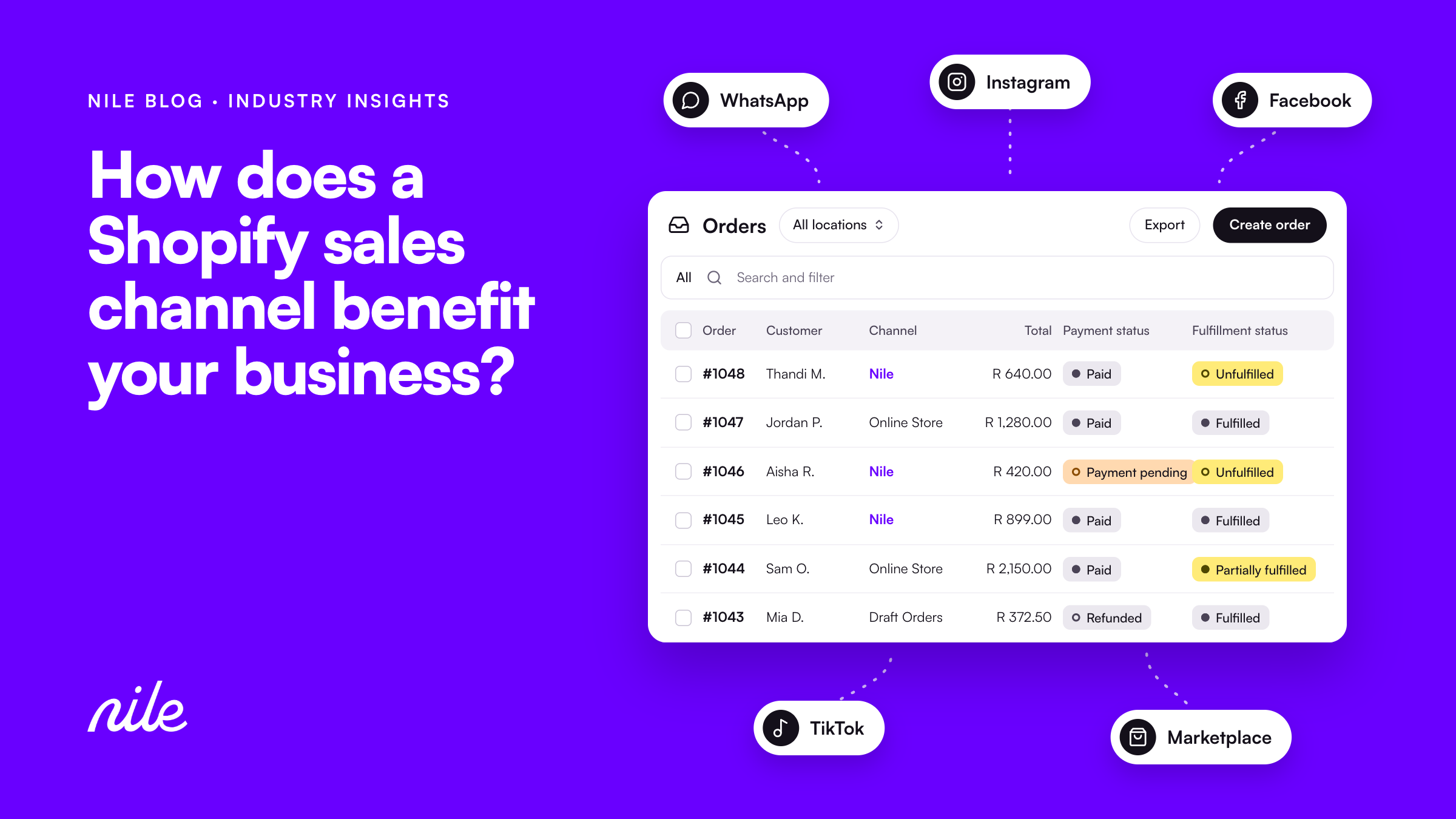
If you're weighing up whether a new sales channel is worth adding to your Shopify store, here's the direct answer: it's one of the few features that can add real revenue without adding real overhead. A sales channel isn't just another app pulling at your data, it's a way of selling that plugs into Shopify directly, with everything flowing straight back into the admin you already use every day. Here's what that actually means for your business.
One admin, not five separate systems
Every extra place you sell from usually means an extra place to manage stock, pricing and orders, unless that channel is built properly. A Shopify sales channel plugs directly into the admin you already run your store from: products, inventory and orders for that channel sit alongside everything else, rather than in a separate login you have to check, reconcile and keep updated by hand. For a small team, that's not a convenience, it's the difference between adding a real revenue stream and adding a second job.
Reach customers where they already are, without building it yourself
Shopify's own list of sales channels includes Shop, the Online Store, Point of Sale, social commerce through Facebook, Instagram and TikTok, and marketplaces like Google Shopping, Amazon and Temu. Each one gives your store a foothold somewhere your customers already are, without you having to build and maintain that integration yourself. Adding a sales channel is closer to switching on a new storefront than installing a plugin, your existing catalogue simply becomes sellable somewhere new.
Every order shows up like any other order
This is the part that saves the most time in practice. A sales channel has to handle three things properly, and each one is a direct benefit to your business:
- Your catalogue stays current automatically. Stock and pricing sync automatically, using Shopify's own product feeds, so you're never selling from a manually maintained copy that's quietly gone out of date.
- Checkout doesn't break the experience. The app either routes customers to Shopify's own checkout, or builds a fully custom one properly using Shopify's own tools, so a sale doesn't stall or feel makeshift at the exact moment someone's ready to pay.
- Every order lands back in your admin. Completed sales show up as real orders, tagged by channel, region or account, so you can see exactly what sold where, fulfil it the normal way, and report on it without stitching data together yourself.
That's the practical payoff: a channel that behaves like any other part of your store, not a side system you have to keep checking on.
What this looks like with Nile
Nile is a Shopify sales channel, not a third-party app bolted onto a store from outside. In practice, that means a customer's WhatsApp conversation can carry your live Shopify catalogue, build a cart, and complete payment in the chat itself, with the finished order landing in your Shopify admin exactly like an order from any other channel, ready for the same fulfilment and reporting process you already use. For a growing South African brand, that's the practical benefit: a new place to sell that doesn't cost you a new system to run.
Sources used for this post
Shopify, "Apps as sales channels", https://shopify.dev/docs/apps/build/sales-channels
Shopify Help Centre, "Sales channels", https://help.shopify.com/en/manual/online-sales-channels